How Idan built the fortune
Idan Ofer grew up inside one of Israel's best known shipping families. His father, Sammy Ofer, built a fleet of cargo vessels after the Second World War, and both of his sons went into the business. Rather than simply running what he inherited, Idan used the family's shipping base as a launch pad for a much broader set of industrial holdings spread across Israel, Asia, Europe and the Americas.
The decisive move came at the end of the 1990s, when the Ofer family acquired control of Israel Corporation, one of the largest holding companies on the Tel Aviv Stock Exchange. Through it the family gained influence over ICL, the fertilizer and specialty minerals group that extracts potash and bromine from the Dead Sea, as well as stakes in shipping, refining and power generation. Over the following years Idan became the main figure behind the group's strategy.
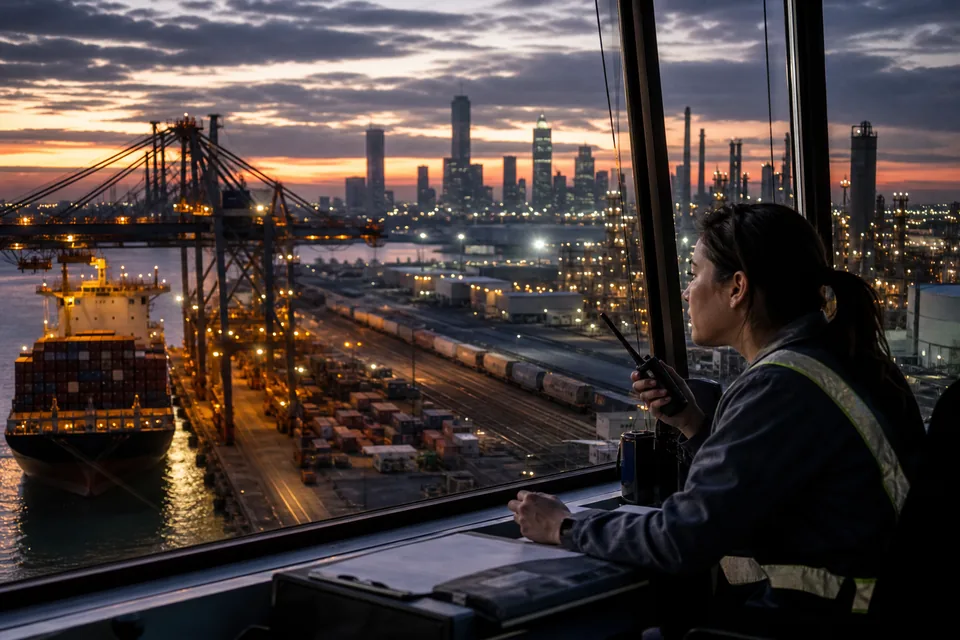
Alongside the listed businesses, he kept a large private shipping operation. Eastern Pacific Shipping, based in Singapore, manages a fleet of tankers, bulk carriers and container ships, and has invested heavily in newer, more fuel efficient vessels. The combination of a privately held fleet and controlling positions in public companies is what turned a family shipping inheritance into one of the largest Israeli fortunes.
Companies and holdings
Most of Ofer's holdings sit inside a web of family trusts and holding companies, with Quantum Pacific Group acting as a central vehicle. The main pieces are:
- Israel Corporation, the listed holding company that controls ICL Group.
- Kenon Holdings, spun off from Israel Corporation in 2015, which has held interests in OPC Energy, the container line ZIM and the Chinese carmaker Qoros.
- Eastern Pacific Shipping, the privately owned fleet operator in Singapore.
- Pacific Drilling, an offshore drilling contractor he founded that operated ultra deepwater drillships.
He has also owned stakes in European football, including a long running investment in Atletico Madrid, and in Dutch club FC Twente in earlier years. Pacific Drilling went through restructuring as the offshore drilling market weakened, showing that not every venture in the portfolio has paid off.
The structure gives Ofer a mix of steady and cyclical income. Fertilizers and specialty chemicals follow agricultural demand, power plants run on long term contracts, while shipping and container freight swing sharply with global trade. The surge in container rates during the pandemic years, for example, lifted the value of the ZIM shares held through Kenon, and the company later distributed part of the proceeds to its own shareholders.
Early life and career
Idan Ofer was born in Haifa in 1955, the younger son of Sammy Ofer. Haifa's port was the center of the family's activity, and he grew up around ships, cargo and the logistics of a trading economy. After his studies he joined the family business and spent his early career learning the shipping trade from the inside.
Over time the Ofer brothers divided the family's interests. His elder brother, Eyal Ofer, took over much of the real estate and part of the shipping operations, while Idan focused on the industrial and energy side and on the Singapore fleet. He later moved his base to London, from where he oversees a group whose assets sit on several continents. Much of the group's management sits in Singapore and London rather than in Israel, a reflection of how international the business has become since his father's era.
Philanthropy and public life
Ofer has supported education, health and the arts, both in Israel and abroad. He and his wife, Batia Ofer, have backed university programs, hospitals and cultural institutions, often in the form of large single gifts tied to buildings or research centers. Their donations have included support for business and public policy schools.
He generally keeps a low public profile and gives few interviews, leaving most public communication to the companies he controls. His influence in Israel draws attention because ICL holds the concession for Dead Sea minerals, a subject of regular political debate about royalties and taxation of natural resources.
In public statements he has tended to speak about business matters such as shipping regulation, energy markets and the future of cleaner vessels, rather than about politics or his personal life. Eastern Pacific Shipping has promoted its investment in ships that can run on liquefied natural gas and other lower emission fuels, which has become part of how the group presents itself to customers and lenders.