How Jude built the fortune
Jude Reyes made his money in a corner of the economy most consumers never see: the trucks, warehouses and route networks that move drinks and food from producers to stores and restaurants. Together with his older brother Chris, he turned a small family purchase of a beer wholesaler in the 1970s into Reyes Holdings, one of the largest privately held companies in the United States.
The brothers grew by acquisition, buying distributors one territory at a time at a moment when American beer wholesaling was fragmented among thousands of local operators. Each purchase added routes, warehouse capacity and supplier relationships, and over several decades the beer business became the largest of its kind in the country, carrying brands from major brewers and importers.
The second leg of the fortune came from food service. Reyes acquired Martin-Brower, a long established supplier to McDonald's restaurants, at the end of the 1990s and expanded it internationally. The third came in the 2010s, when the Coca-Cola Company refranchised its American bottling territories and Reyes took on large regions in California and the Great Lakes. Distribution is a low margin business, but with the scale the brothers reached, steady volumes translate into substantial and dependable cash flow.
Companies and holdings
Reyes Holdings is headquartered in Rosemont, Illinois, near Chicago's O'Hare airport. Its main units are:
- Reyes Beer Division, a collection of distributors across many states.
- Martin-Brower, which supplies McDonald's restaurants in North America, Latin America, Europe and Asia.
- Reyes Coca-Cola Bottling, serving California and Nevada.
- Great Lakes Coca-Cola Bottling, serving Illinois, Michigan and neighboring states.
Jude serves as co-chairman alongside his brother. The family has never listed the company, and financial details are only partly disclosed.
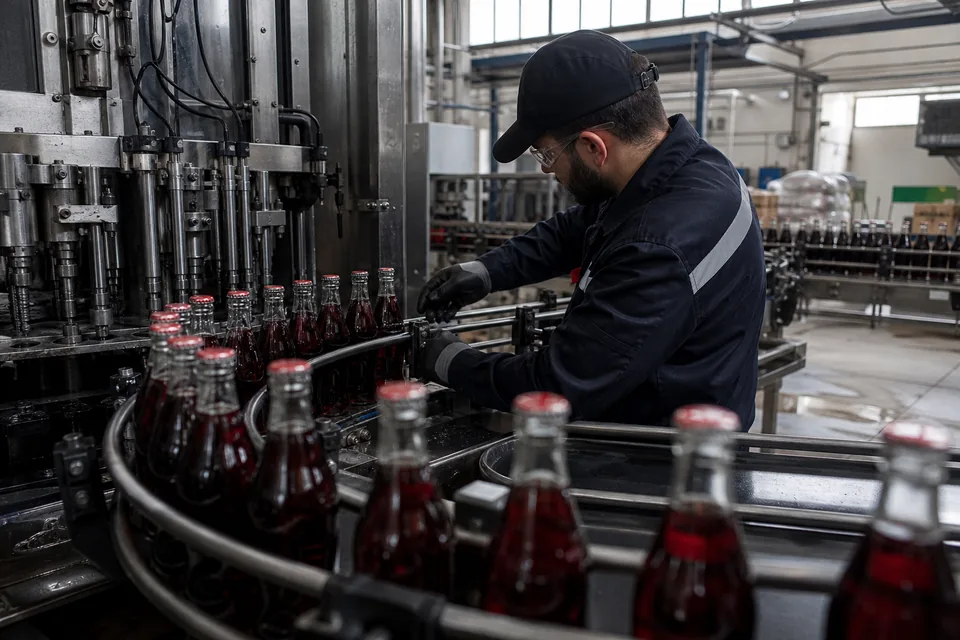
The Coca-Cola bottling operations brought manufacturing into the group for the first time on a large scale, with production plants, fleets of delivery trucks and thousands of employees serving supermarkets, convenience stores and vending machines. Together the divisions employ tens of thousands of people across several continents.
Early life and career
Jude Reyes was born in the mid 1950s and grew up in a close family that would go on to build its business together, and he and his brothers learned the wholesale trade largely on the job. The family's entry into ownership came in 1976, when they bought a modest distributorship and began building routes and relationships with brewers.
Rather than seek outside investors, the brothers financed expansion with retained earnings and bank debt and kept decision making within a small circle. Jude has typically been described as more operational and less public than Chris, focusing on the integration of acquired businesses, logistics and relationships with suppliers. Over time the company brought in professional managers to run its divisions, while the brothers retained strategic control as co-chairmen.
Philanthropy and public life
Jude Reyes has kept a low profile and gives few interviews. His charitable activity is largely private and channelled through family giving and the community programs of Reyes Holdings and its units, which support local causes in the regions where they operate trucks and warehouses. The company also promotes responsible drinking initiatives through its beer business, as is common in the industry.
Like his brother, he has supported political candidates, although his public footprint is smaller. Members of the Reyes family are known in Chicago civic circles, but Jude himself has avoided the media attention that often accompanies owners of large fortunes.
The Reyes business offers a useful case study of how wealth can accumulate in industries with thin margins. Wholesalers earn small amounts per case or per delivery, yet a network covering large metropolitan regions handles volumes measured in hundreds of millions of cases a year. Long term contracts with brewers, with Coca-Cola and with McDonald's give the business predictable demand, and that predictability allowed the brothers to borrow against future cash flow to fund the next acquisition. Jude's role in that approach has been to keep acquired operations efficient enough to repay the debt and support further growth, often working behind the scenes while his brother handled most external relationships.