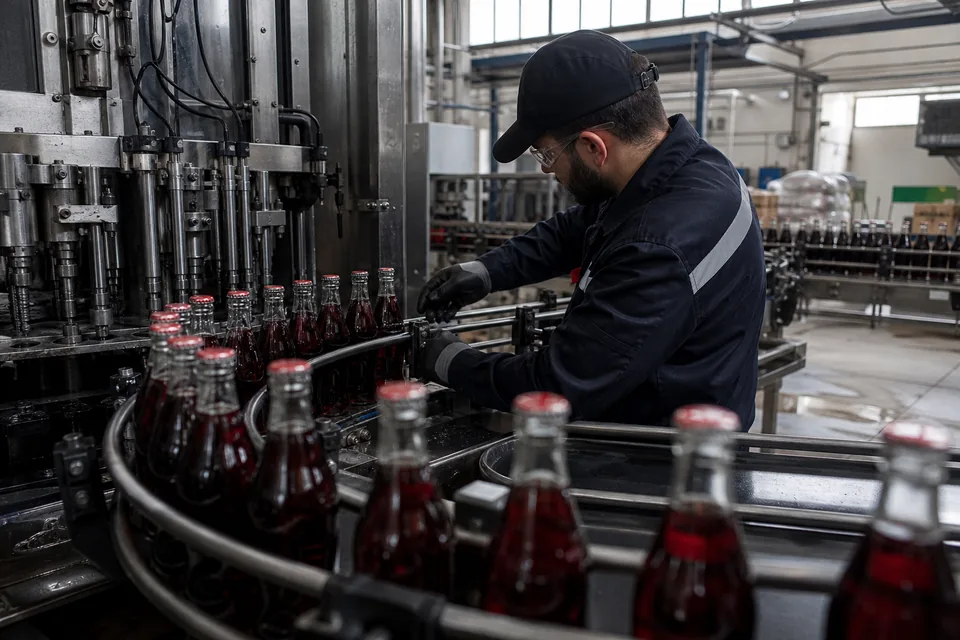
How María Asunción built the fortune
María Asunción Aramburuzabala's fortune began with beer. Her grandfather, Félix Aramburuzabala, was among the founders of Grupo Modelo in Mexico City in 1925, and the company went on to become Mexico's largest brewer and the maker of Corona, one of the best selling beers in the world. Along with a handful of other founding families, the Aramburuzabalas kept a large shareholding in Modelo for generations.
After her father, Pablo Aramburuzabala, died in 1995, she took charge of the family's interests and joined Modelo's leadership as a board member and later vice chairwoman. During this period Modelo deepened its international partnership with Anheuser-Busch, which had bought a large minority stake in the 1990s. When Anheuser-Busch was itself acquired by Belgian-Brazilian InBev in 2008, the new group became the natural buyer for the rest of Modelo. In 2013 AB InBev completed the purchase of the shares it did not already own, ending decades of independent Mexican control.
For the Aramburuzabala family the sale converted an illiquid stake in a family brewery into cash and shares in the world's largest brewer. María Asunción joined the AB InBev board, and part of the proceeds went into her own investment firm, Tresalia Capital, which allowed her to diversify across real estate, technology and other sectors in Mexico and abroad.
The deal also had a regulatory chapter. The United States Department of Justice challenged the original transaction because of Modelo's share of the American beer market, and approval came only after AB InBev agreed to sell Modelo's US import business and brewing rights for brands such as Corona in the United States to Constellation Brands. That is why Corona is sold by AB InBev in most of the world but by a different company in the United States.
Companies and holdings
Her main assets are a shareholding in Anheuser-Busch InBev and the portfolio managed by Tresalia Capital, the Mexico City investment company she founded and chairs. Tresalia's investments have included:
- KIO Networks, a provider of data centre and cloud services in Mexico and Latin America
- Abilia, a residential and commercial real estate developer
- stakes in other private companies and funds in Mexico, the United States and Europe
She has also served on the boards of several large Mexican companies over the years, including the broadcaster Grupo Televisa and the consumer products maker Kimberly-Clark de México. These board roles, combined with her experience at Modelo, have made her one of the most connected figures in Mexican business.
Because AB InBev shares trade on several stock exchanges, a significant part of her wealth moves with the global beer market and the company's efforts to reduce debt taken on for its acquisitions. The Tresalia portfolio provides a counterweight with assets tied mainly to the Mexican economy.
Early life and career
Aramburuzabala was born in Mexico City in May 1963. She studied accounting at the Instituto Tecnológico Autónomo de México, known as ITAM, one of the country's leading private universities for economics and business. Her training in finance shaped her later role as an investor rather than as a brewing executive.
As a young professional she gained experience in the family's business affairs, which were closely tied to Modelo and its founding shareholders. The sudden death of her father thrust her into a leading role in her early thirties, and she became one of very few women at the top of Mexican corporate life at the time. Over the following years she represented the family in negotiations within Modelo's complex shareholder structure and in its relationship with Anheuser-Busch, and later took part in the discussions that led to the sale to AB InBev.
Philanthropy and public life
Aramburuzabala has supported education and social programmes in Mexico, often through foundations connected with her family and with Grupo Modelo, which has funded community and environmental projects. She has spoken publicly about the importance of women in leadership. Her personal donations are generally not publicised in detail.
She gives occasional interviews, mainly about business and investing in Mexico, and has kept her private life largely out of the press. Her public profile rests on her board positions and on her role as one of the most prominent female investors in Latin America.